



Knowledge Graphs Your Experts Govern and Your Agents Cite.
Squirro Graphite turns your taxonomies and ontology into a knowledge graph. Enterprise search and AI agents query it as a tool and show which concepts each answer used.



Trusted by Industry Leaders








Answers From What No Single Document Says.
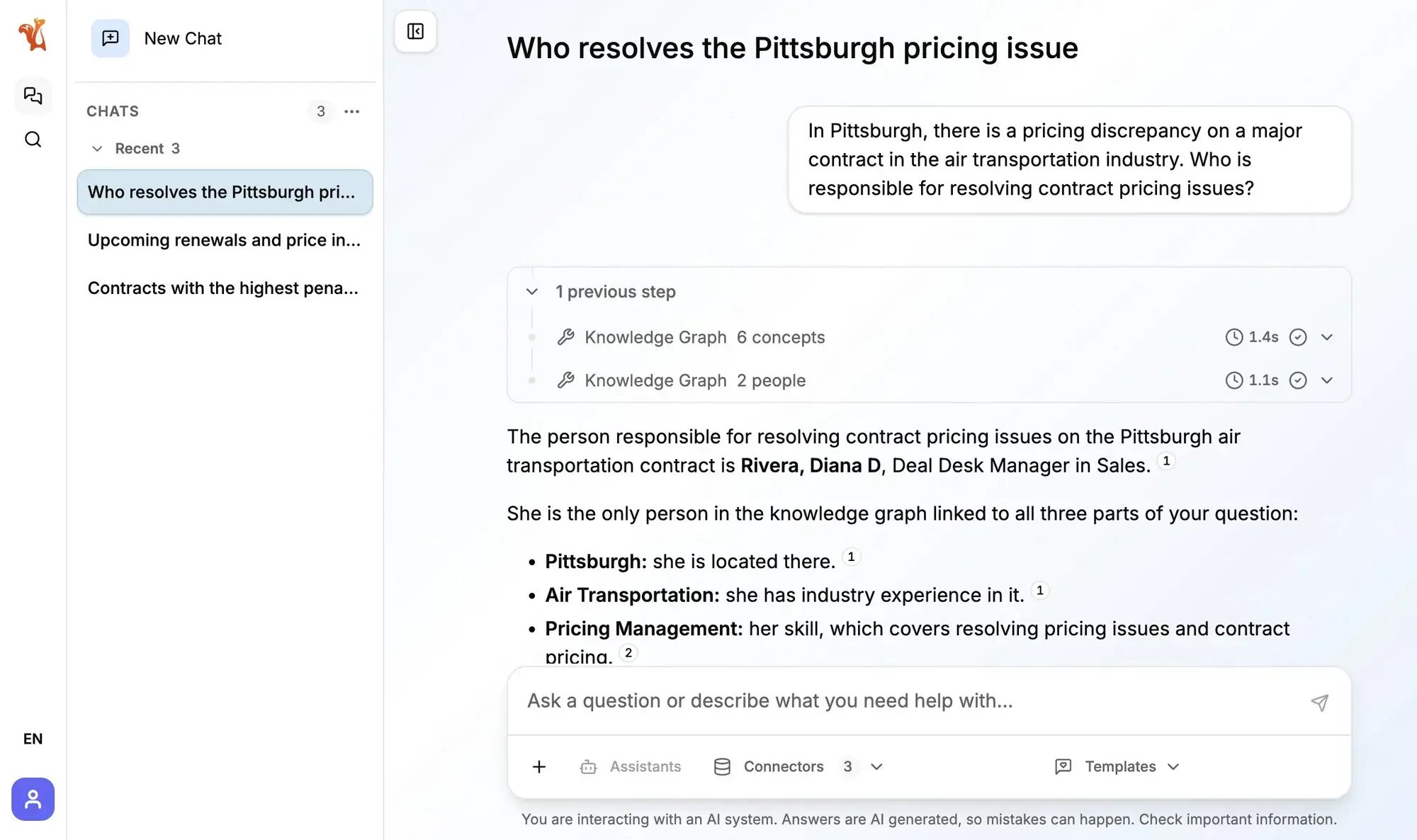
Each Knowledge Graph step opens to the query Squirro sent and what came back. When concepts cannot answer “who”, it makes a second call for the people linked to them.
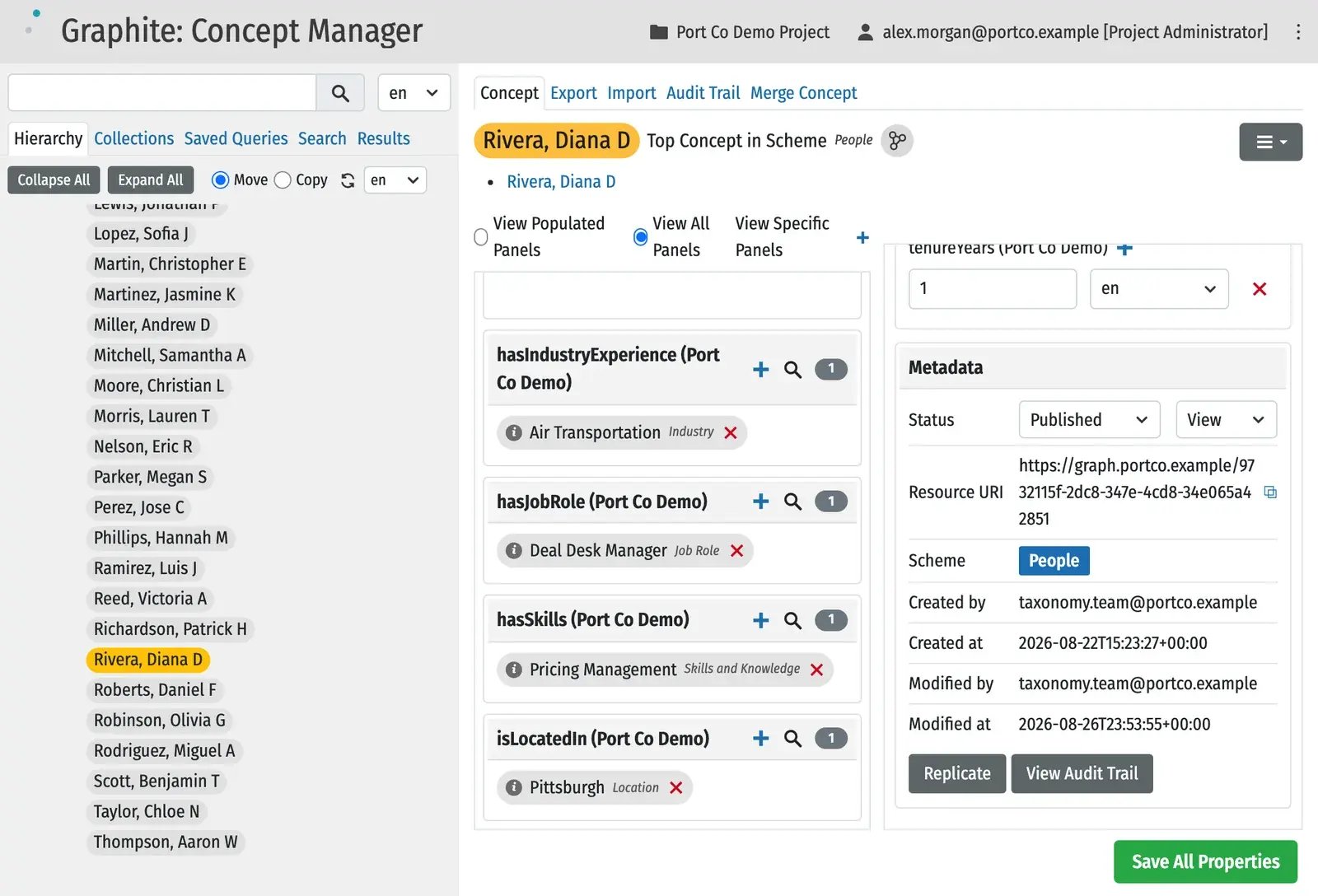
Explore Squirro AgentsA footnote opens the person, product, or place in Graphite, with the typed relationships the answer relied on, its status, and who last changed it.
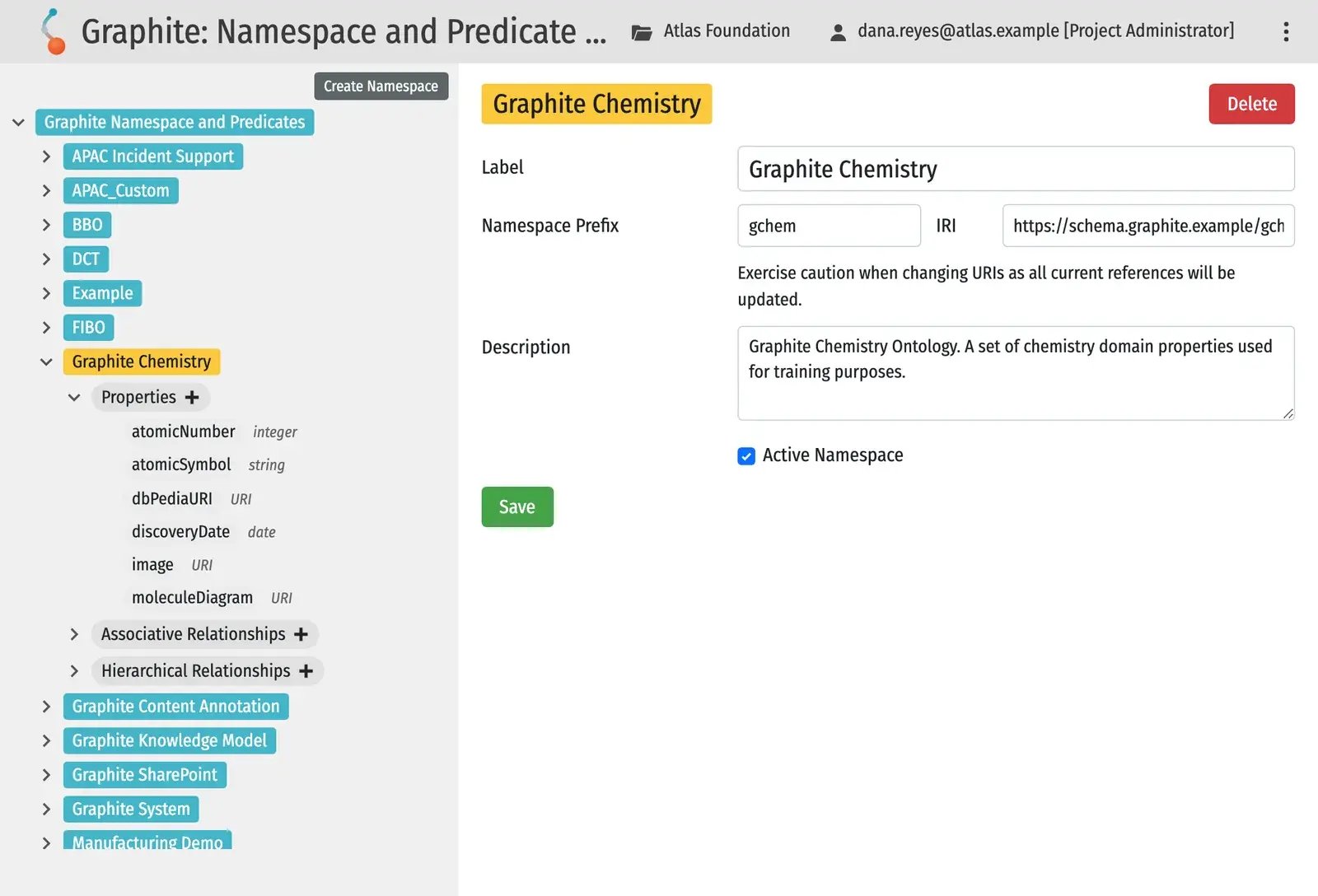
Namespaces hold typed properties and relationships, templates assemble them, and schemes apply the templates. Every concept of a kind is described the same way.
Explore Squirro Graphite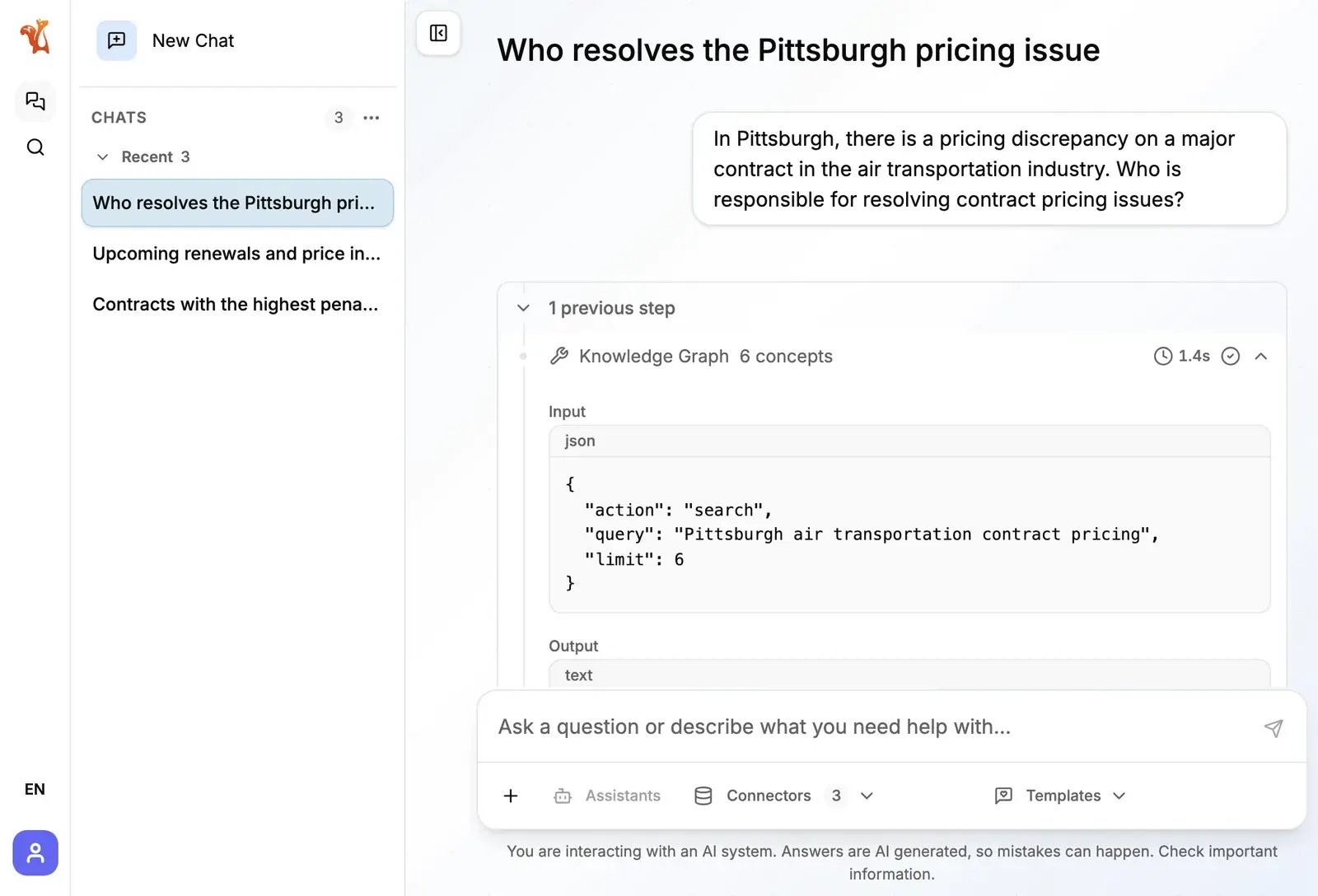
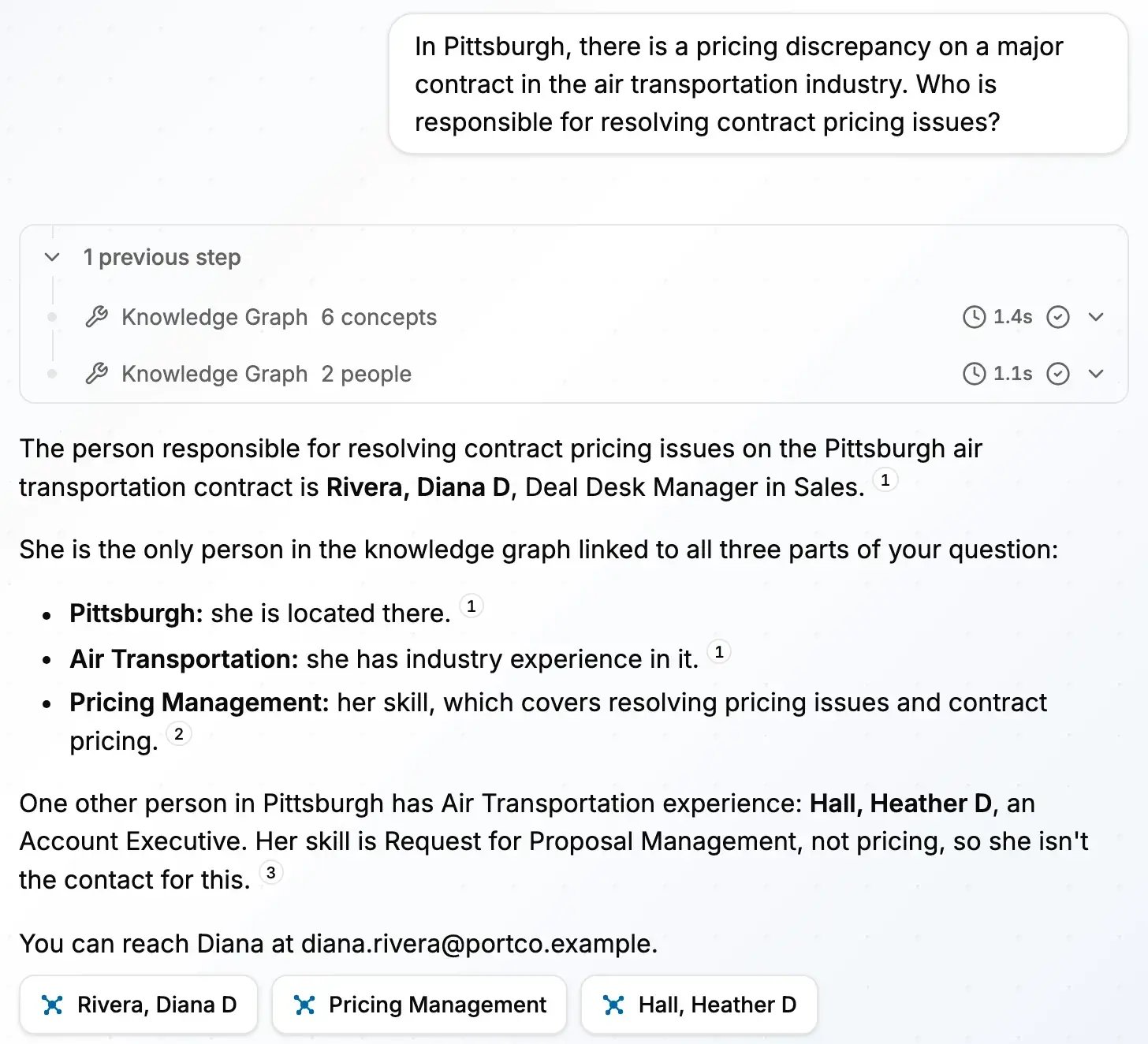
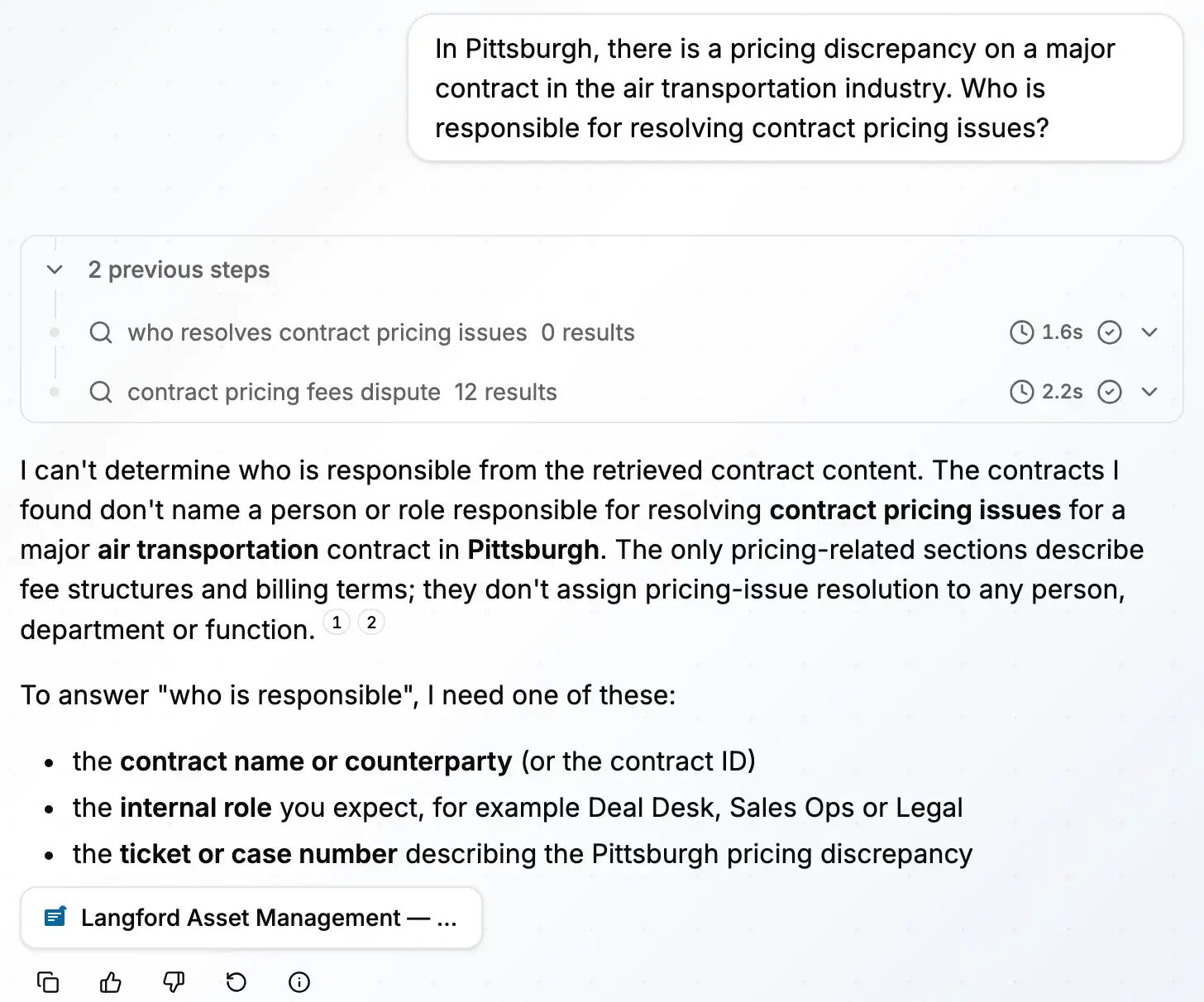
The Same Question, Answered With and Without the Graph.
Who resolves contract pricing issues for air transportation in Pittsburgh? With the graph, Squirro names the one person linked to the city, the industry, and the skill. Without it, the contracts name no one, so Squirro says it cannot tell.
Grown From Your Documents and Approved by Your Editors.
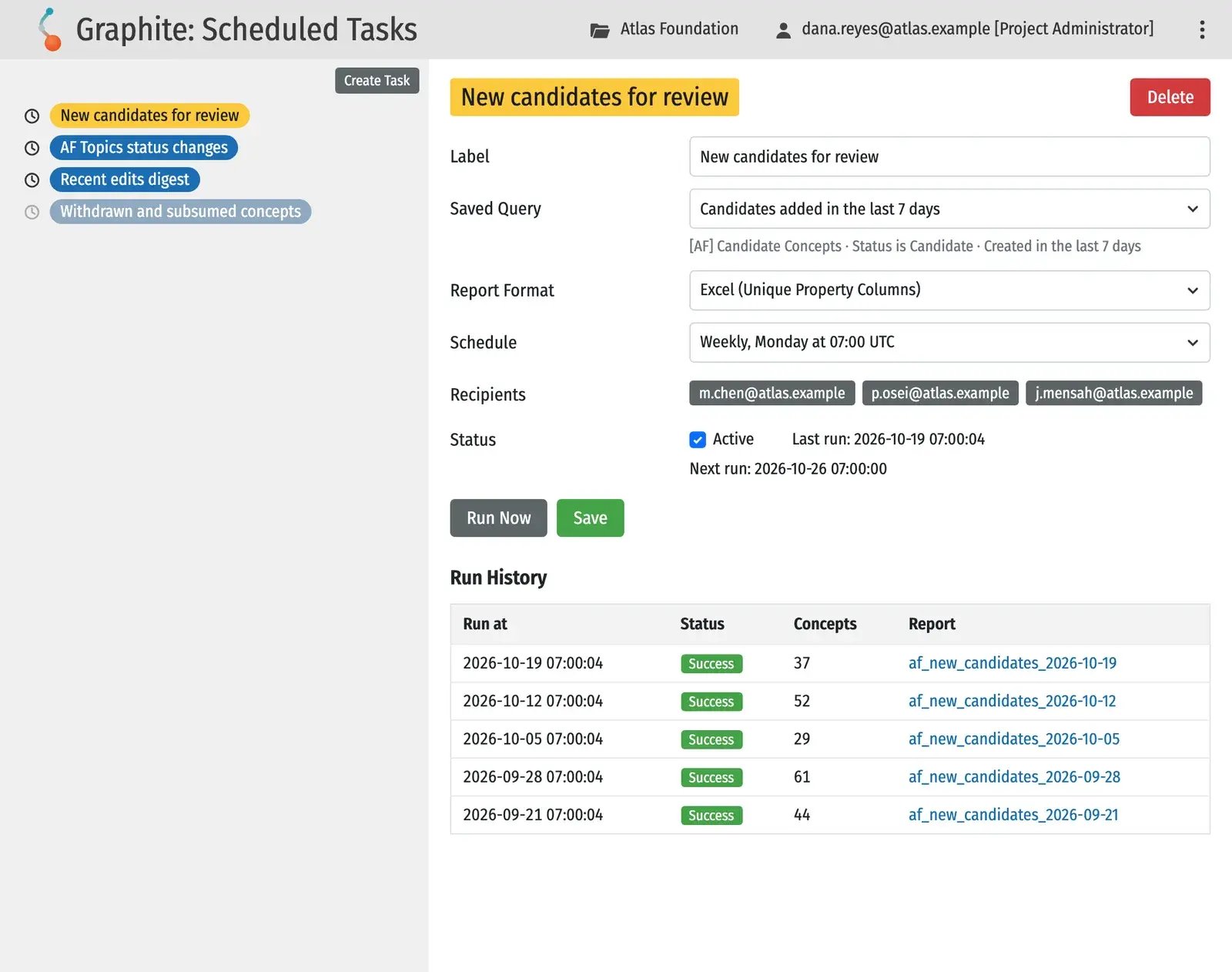
Squirro links each document to the concepts it mentions and proposes the terms your graph is missing. A scheduled report brings the week’s candidates to your editors, and nothing joins the graph until one of them accepts it.
- Each candidate traceable to the passages that produced it
- Lifecycle statuses and an audit trail on every concept
Where the Graph Made the Difference.
See All Customer Stories
90%+accuracy on technical troubleshooting questions
Field and customer engineers get grounded answers from service documentation and service history, with the knowledge graph resolving which machine configuration a question is about. Other systems stayed below 70% on the same content.
Read the advanced manufacturing story
92%shorter mean time to initial resolution
A global telco supports over 100 million IoT devices. A knowledge-graph-guided workflow gathers what each support ticket needs, classifies and routes it, and digital agents start the next steps.
Read the global telco story